Swaroop Revankar
Founder & CEO
Architect and urban planner. Mackintosh School of Architecture, Glasgow. Fifteen years as Project Director at the Hiranandani Group.
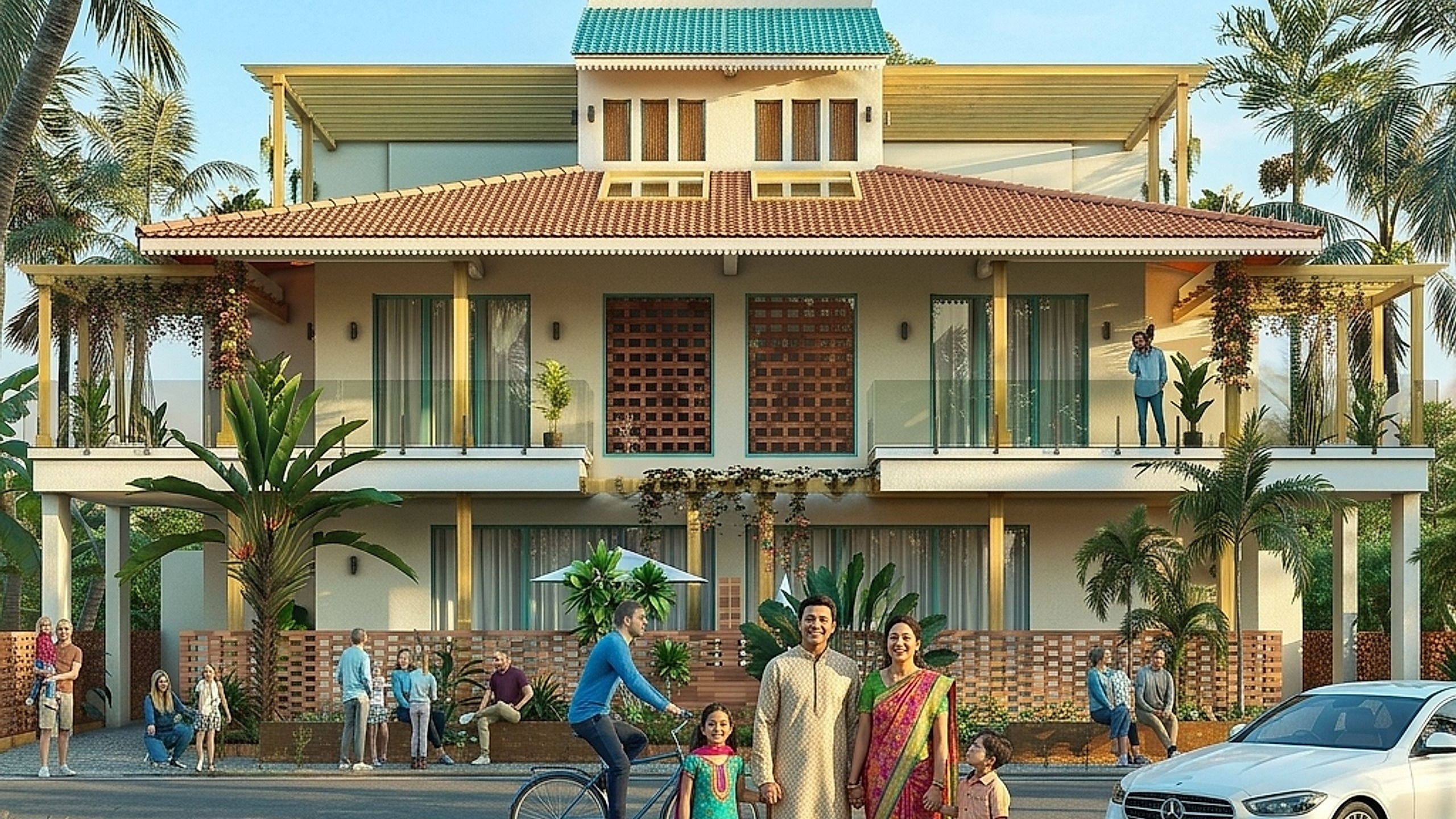
Cerulean · Revdanda, Alibaug
About Cerulean
Drawn from real township experience. Built to ensure that what is designed gets delivered — precisely, transparently, and at the scale of a small estate rather than a brochure project.

The Architect Behind the Estate
Founder & CEO, ShaSmit Developers
"I have spent fifteen years building townships. With Cerulean, I wanted to build a sanctuary."
Swaroop Revankar is an architect and urban planner — trained at the Mackintosh School of Architecture, Glasgow, and shaped over a decade and a half as Project Director at the Hiranandani Group, working directly with Dr Niranjan Hiranandani on Mount Alterra in Khandala and a coastal township at Nagaon, Alibaug.
Cerulean is a signature development by ShaSmit Developers, thoughtfully conceived as an intimate, refined estate rather than a conventional township. Every visit is personally hosted by the founder or a member of the senior leadership team, creating a direct and transparent experience. Each residence is offered exclusively to a carefully selected family through private, appointment only interactions.
Career Highlights
Project Director
Hiranandani Group (Leisure Real Estate)
Architecture & Planning
Mackintosh School of Architecture, Glasgow
15+ Years
Delivering premium townships & estates
RERA Registration
P52000081109
The Team
Four custodians behind the residence — an architect, two partners, and the financial discipline that keeps the project on the founder’s word.

01
Founder & CEO
Architect and urban planner. Mackintosh School of Architecture, Glasgow. Fifteen years as Project Director at the Hiranandani Group.

02
Partner · Industrialist
Partner in the practice; brings industrial discipline to the delivery of the estate.

03
Legal & Tax Counsel
A practising lawyer in direct and indirect taxation, accountancy and cross-border transactions — Income Tax, GST, Company Law, and FEMA/RBI compliance for FDI, ODI and remittances. His work spans capital-markets fundraising, private placements, SME and main-board IPOs, and trademark and copyright protection.

04
Partner · Resources & Events
A Masters in Teaching Languages from London and an Electronics Engineering degree from Mumbai. Early years in learning and development at Tata Consultancy Services, then community programmes with Teach India and Tech Mahindra Foundation’s SMART+ for differently-abled youth. She now manages resources and events for Cerulean.
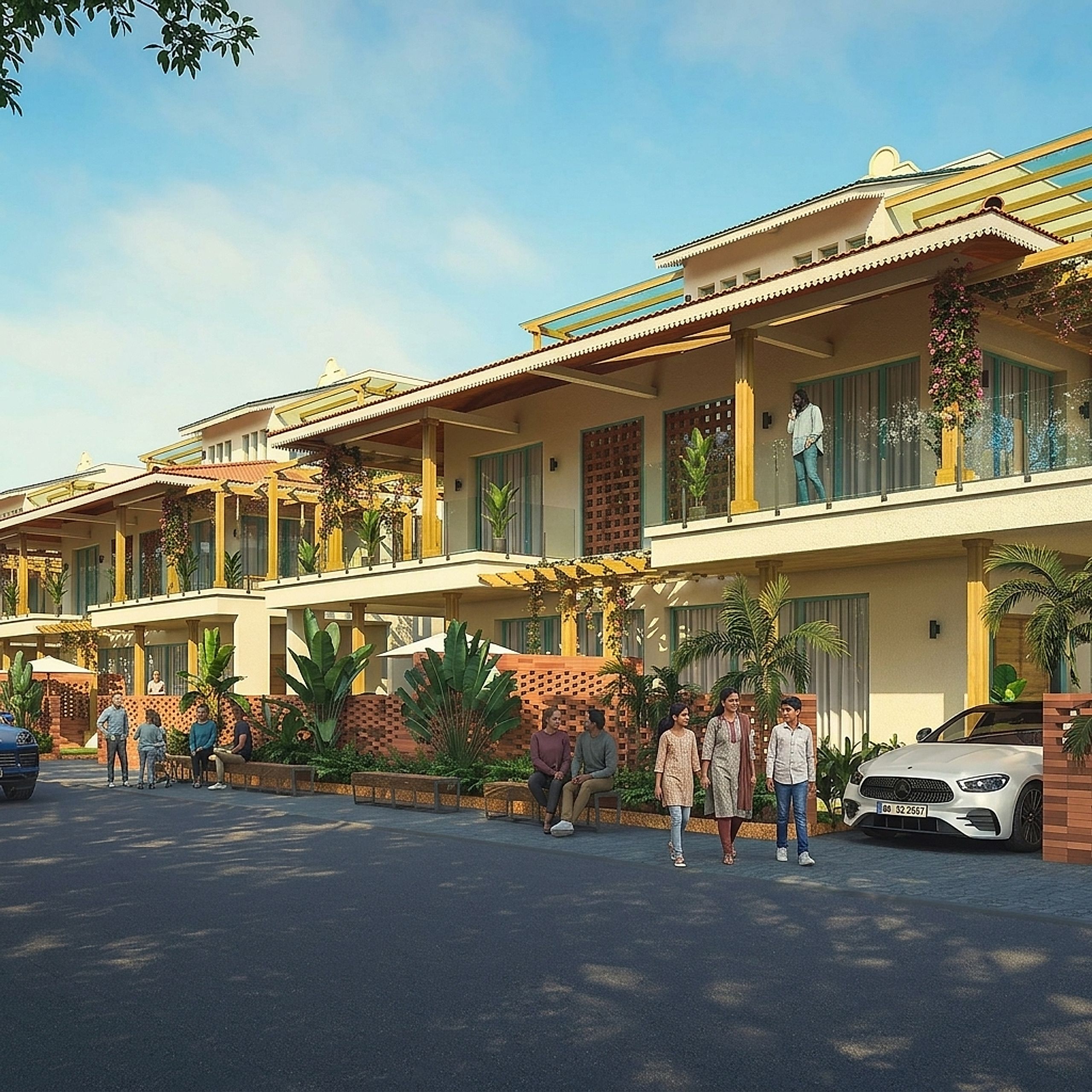
01 · The Proposition
Cerulean is a compact, gated community for a select few — spacious, bespoke, and designer-curated, yet attainable. Drawn for the family willing to live beyond the city, to soak in the surroundings, and to experience a living quotient beyond imagination.
Four residences to a cluster. A single architect at the studio. No sales team between the founder and the family who will call it home.
See the Residence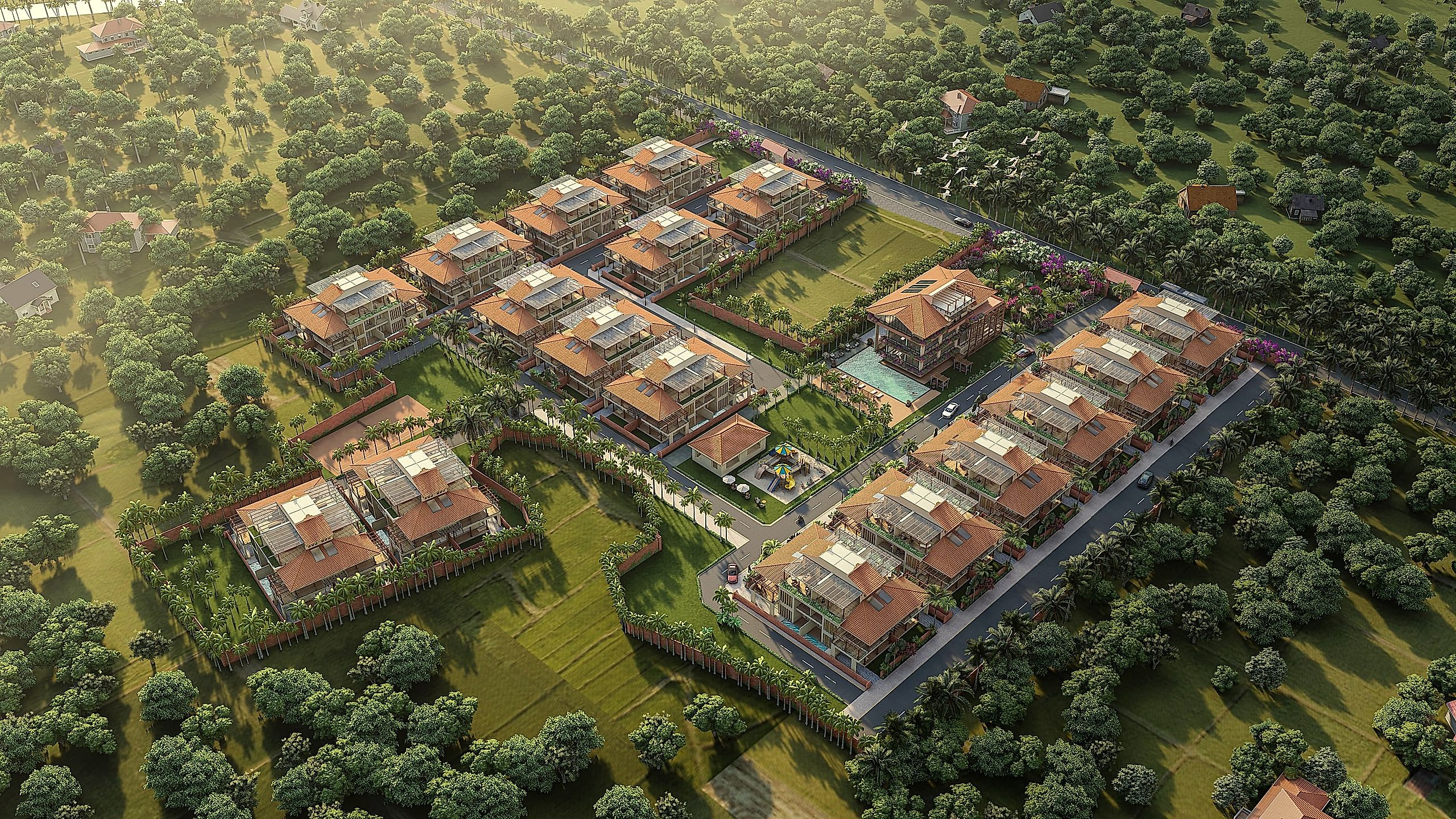
02 · The Land
The estate is set between two hundred and fifty acres of protected coastal mangrove — fronted by the Arabian Sea — and the upcoming 200-acre Hiranandani Sands township. A rare pocket of Revdanda where the wadis still breathe and the coast still keeps time.
The land does most of the work. The architecture, quietly, gets out of its way.
Find the Coast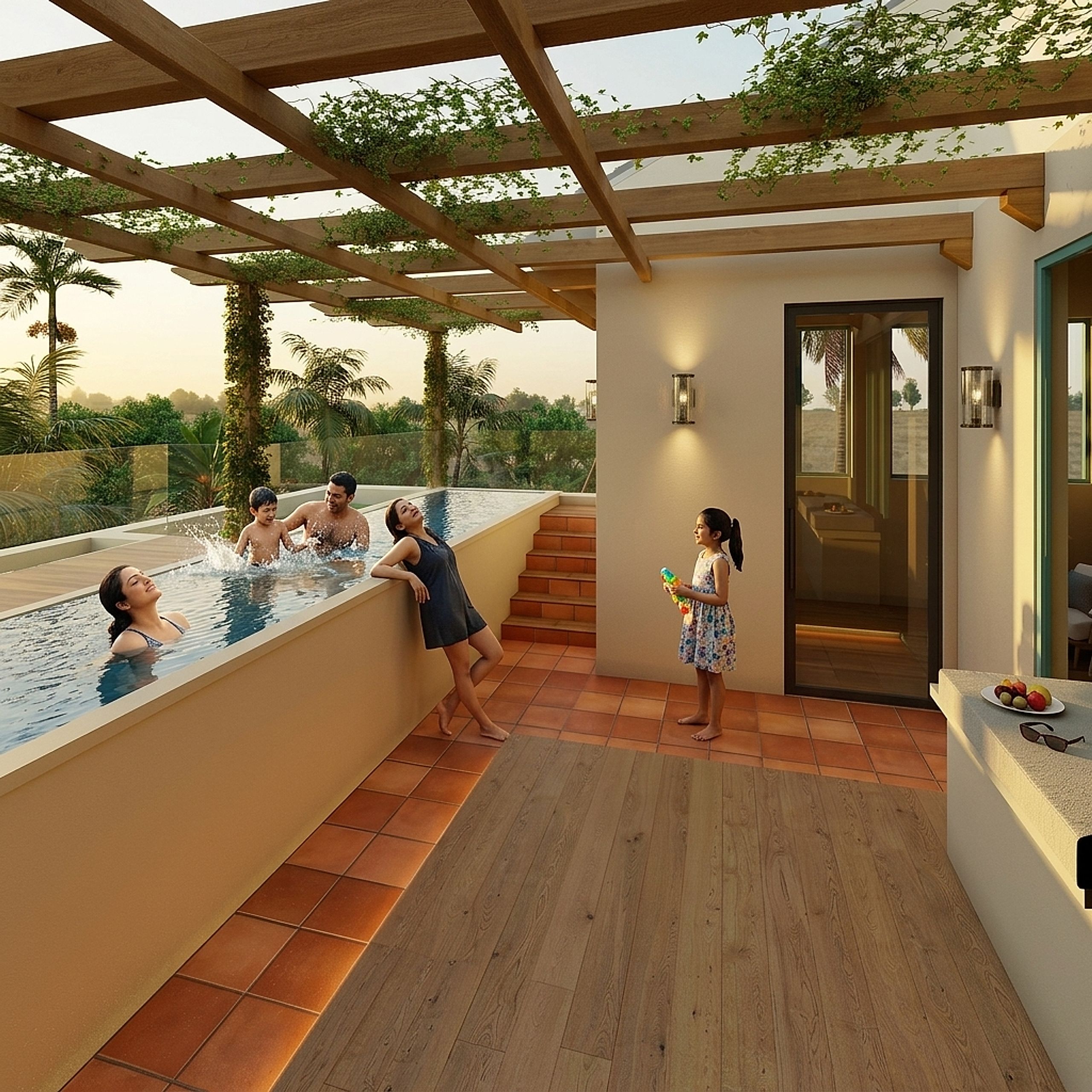
03 · The Days
Friday evening arrives with the smell of the wadis. Saturday begins with six laps in your sky pool before anyone else is awake. Lunch is long. Sunday is for the fort walk, the market, and the slow drive back along the coast.
Cerulean is built for the small rituals — the ones a city home will never make room for.
A Weekend in FramesOn the Address

Kolaba Fort · Alibaug coastline
Alibaug carries a quiet weight. Once the naval seat of Maratha Admiral Kanhoji Angre, anchored by the seventeenth-century Kolaba Fort, it has become — in the last two decades — the address India's most considered families choose when they choose not to choose Goa.
Around it sit villages that have refused to become resorts. Nagaon. Kashid. Korlai. And Revdanda, where the lanes still narrow into the wadis, the fishermen still walk the same tide line, and the evening still belongs to nobody in particular.
With the new Sewri–Nhava Sheva Trans-Harbour Link, the coast is closer to Mumbai than it has ever been. The geography moved. The hour did not.
17thcentury
Kolaba Fort — Maratha Admiral Kanhoji Angre
108km
South of Mumbai · on the Konkan coast
20 +beaches
Across the Mandwa–Murud coastline
2026horizon
Sewri–Nhava Sheva Trans-Harbour Link
The Promise of the Address
An unobstructed view of the ocean —
over coconut lagoons, and waves
that will keep you company for L I F E.
The Quiet Geography
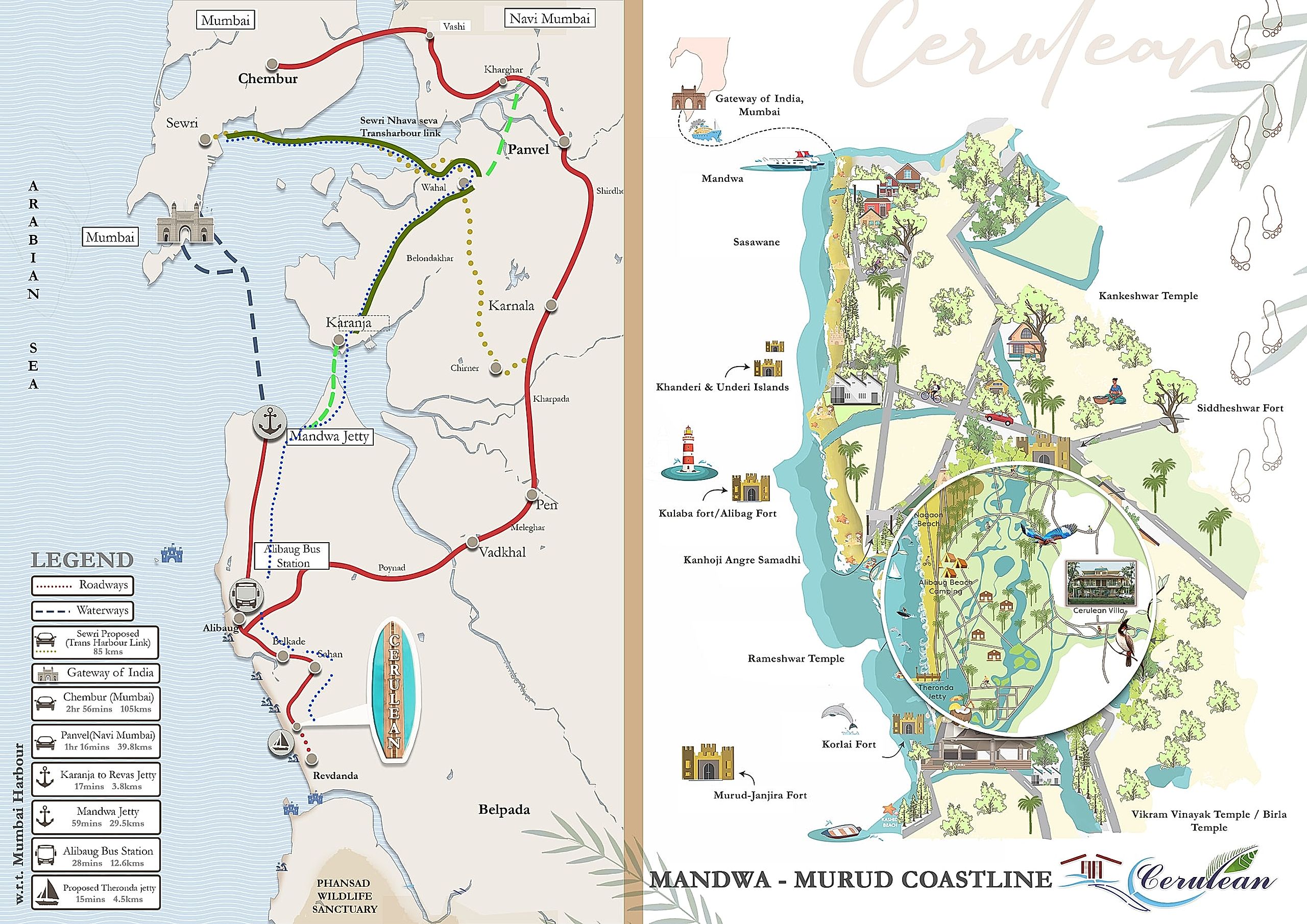
Mumbai to Revdanda · 45 min by sea · under 3 hr by road
Cerulean sits on the Mandwa–Murud coastline, framed by the Kankeshwar, Siddheshwar, Kulaba and Korlai forts. From Gateway of India, a speed-boat in under an hour. From Pune, a quiet drive. From the new Sewri–Nhava Sheva Trans-Harbour Link, closer than the coast has ever been.
45
Min · Sea Route
Travel Times · w.r.t. Mumbai Harbour
Gateway of India → Mandwa Jetty
Sea · Speed boat · 29.5 km
59 min
Karanja → Revas Jetty
Sea · Ferry · 3.8 km
17 min
Proposed Theronda Jetty
Sea · 4.5 km
15 min
Mandwa Jetty → Alibaug Bus Stand
Road · Drive · 12.6 km
28 min
Chembur (Mumbai)
Road · Car · 105 km
2 hr 56 min
Panvel (Navi Mumbai)
Road · Car · 39.8 km
1 hr 16 min
Mandwa Jetty → Cerulean Estate
Road · Arranged pick-up · ~30 km
1 hr
What's Around You
Beaches
Nagaon Beach
Kashid Beach
Theronda Jetty Front
Forts
Kulaba / Alibag Fort
Korlai Fort
Siddheshwar Fort
Murud-Janjira Fort
Temples
Kankeshwar
Rameshwar
Vikram Vinayak / Birla
Nature
Phansad Wildlife Sanctuary
Khanderi & Underi Islands
Kanhoji Angre Samadhi
Site Address
Survey No. 20/2, Village Revdanda, Palav
Taluka Alibaug · District Raigadh
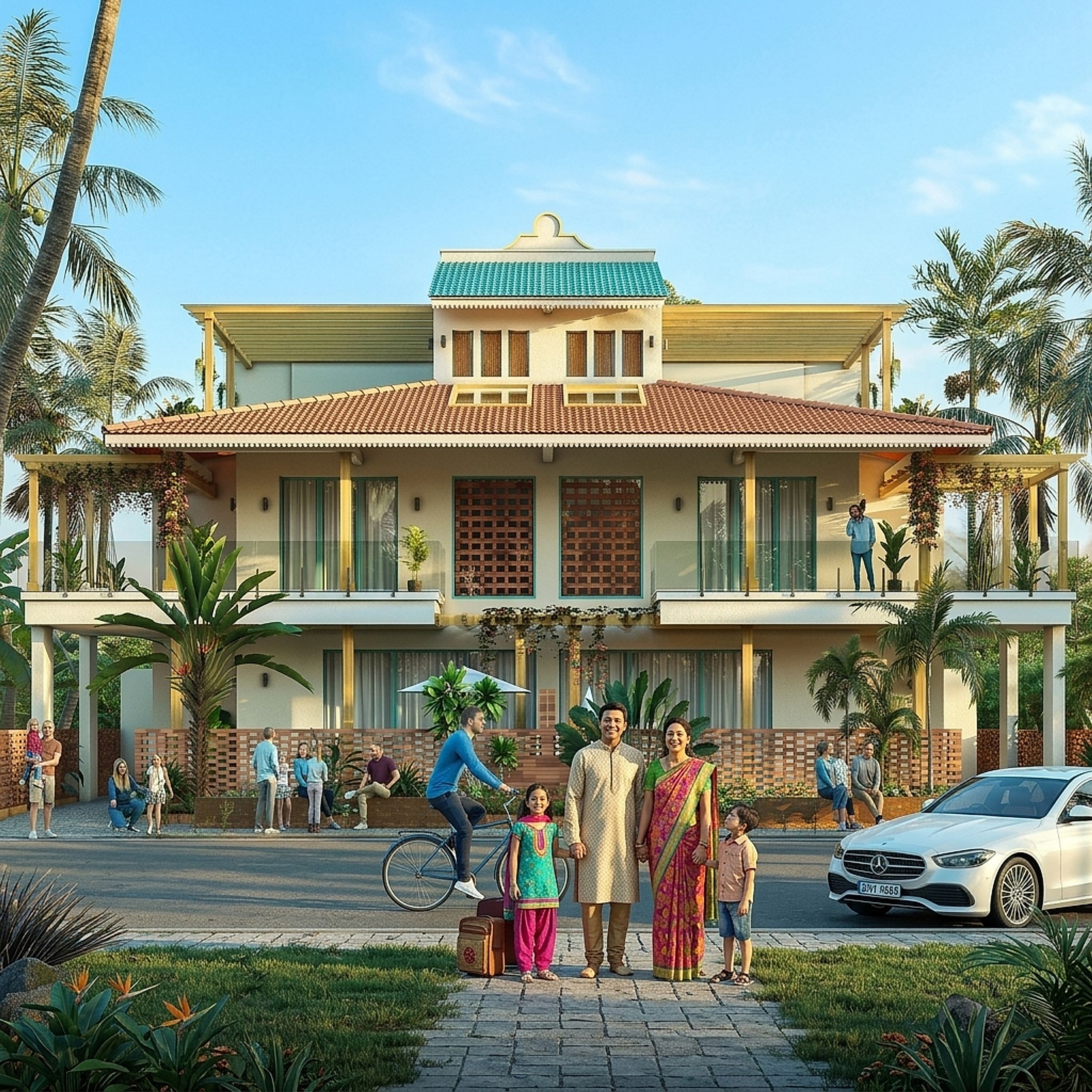
“Cerulean was not designed for everyone. It was designed for the few who notice how a house holds the evening.”
3,100 sqft
Useable Area, Per Residence
RERA carpet 1,700 sqft · across four levels
4
Residences, Per Cluster
No more, by design
15,000 sqft
Of Members-only Clubhouse
A 22-metre pool at its centre
250 acres
Of Protected Forest
On the estate’s western edge
What Comes With the Address
Eight invitations — half of them inside your own residence, the rest woven through the estate. Read them at the pace of a quiet evening.
Your own plunge pool at the third level — for the early swim no one else is awake for, and the late float that only the moon will witness.
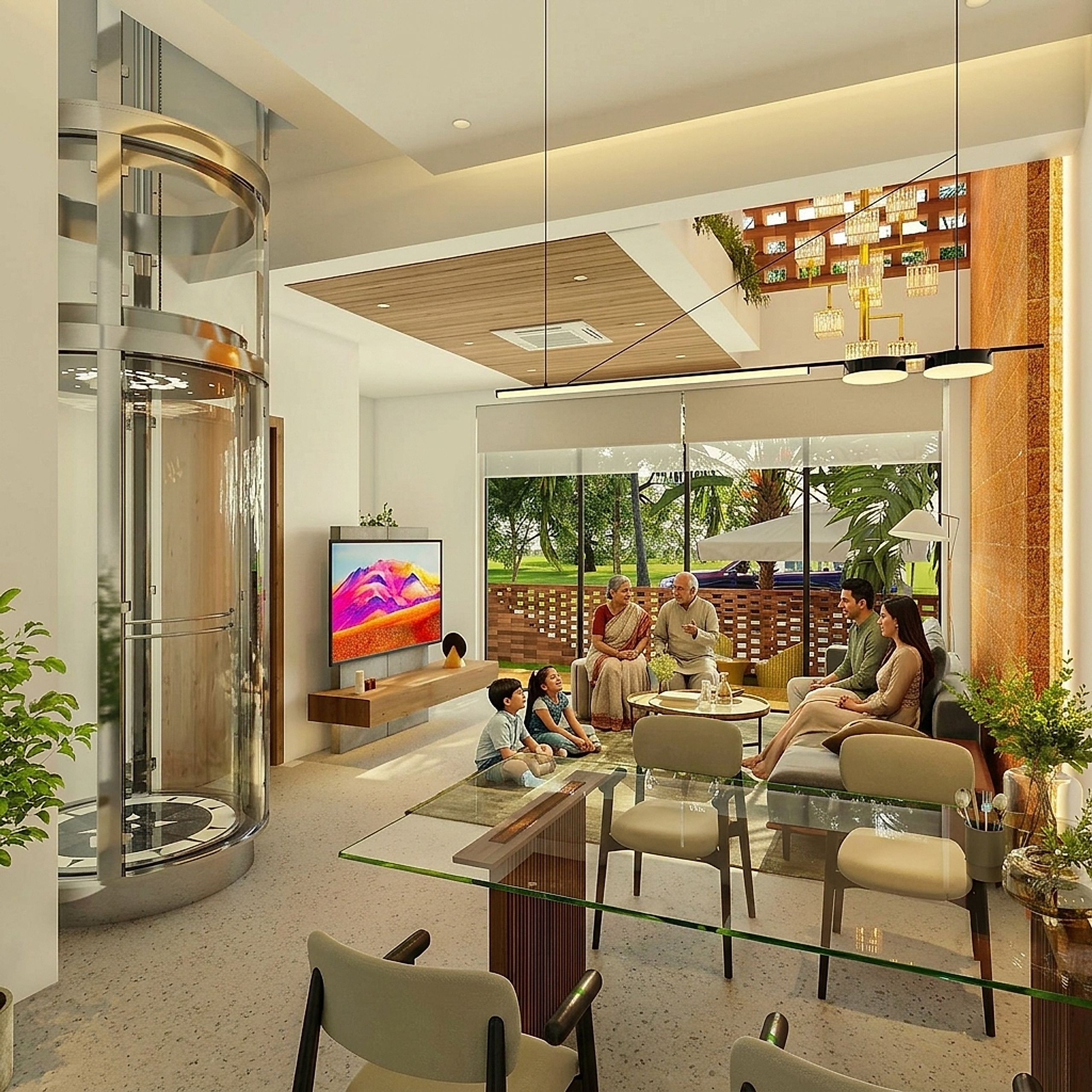
Italian marble, bespoke joinery, soft linens, art on the walls. Handed over ready for a Friday evening; the only thing you carry in is the weekend bag.
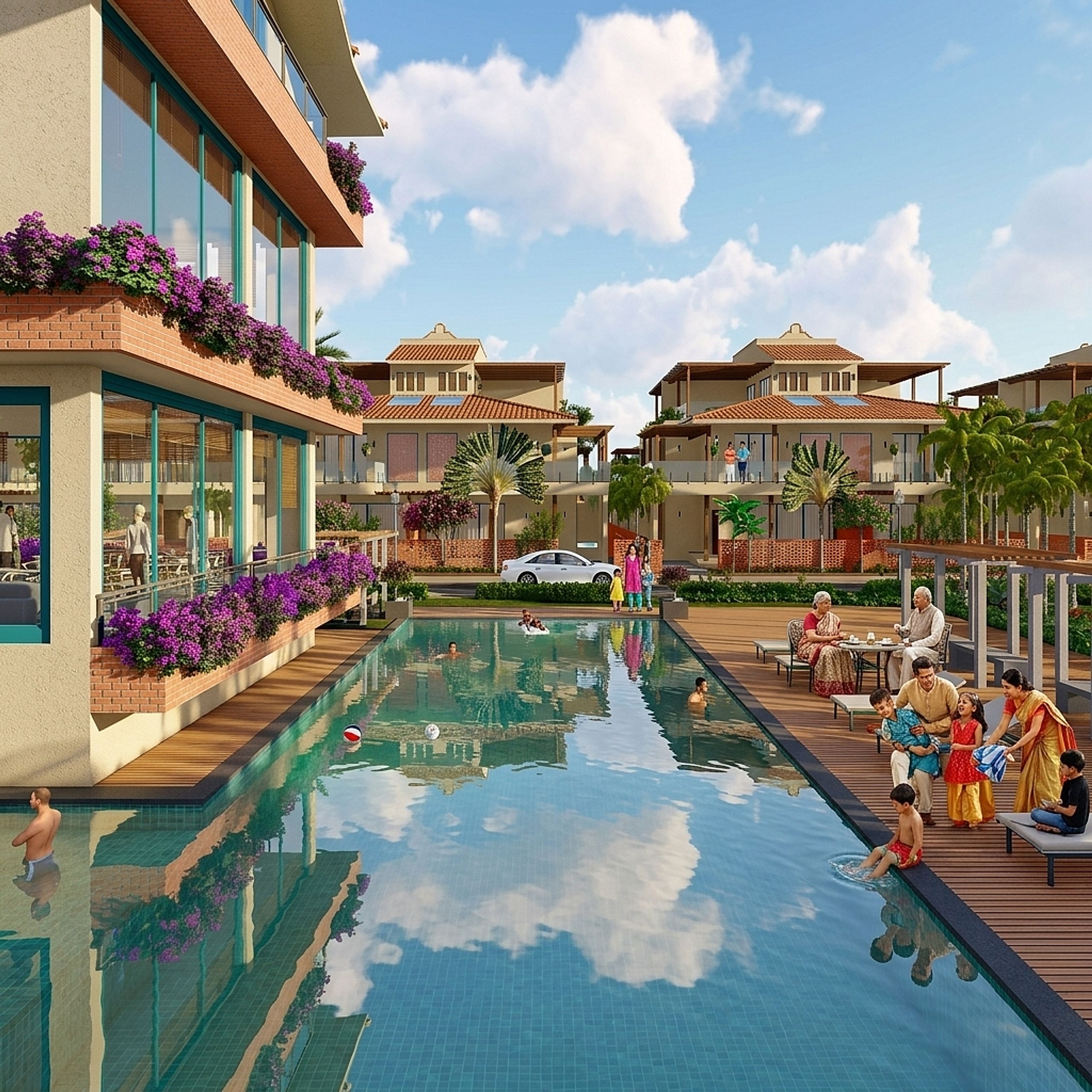
15,000 sqft of clubhouse anchored by a 22-metre swimming pool — for the family that swims before breakfast and gathers after sundown.
Two hundred and fifty acres of protected coastal mangrove — untouched, unbuilt, and the reason the air on your terrace will always feel like this.
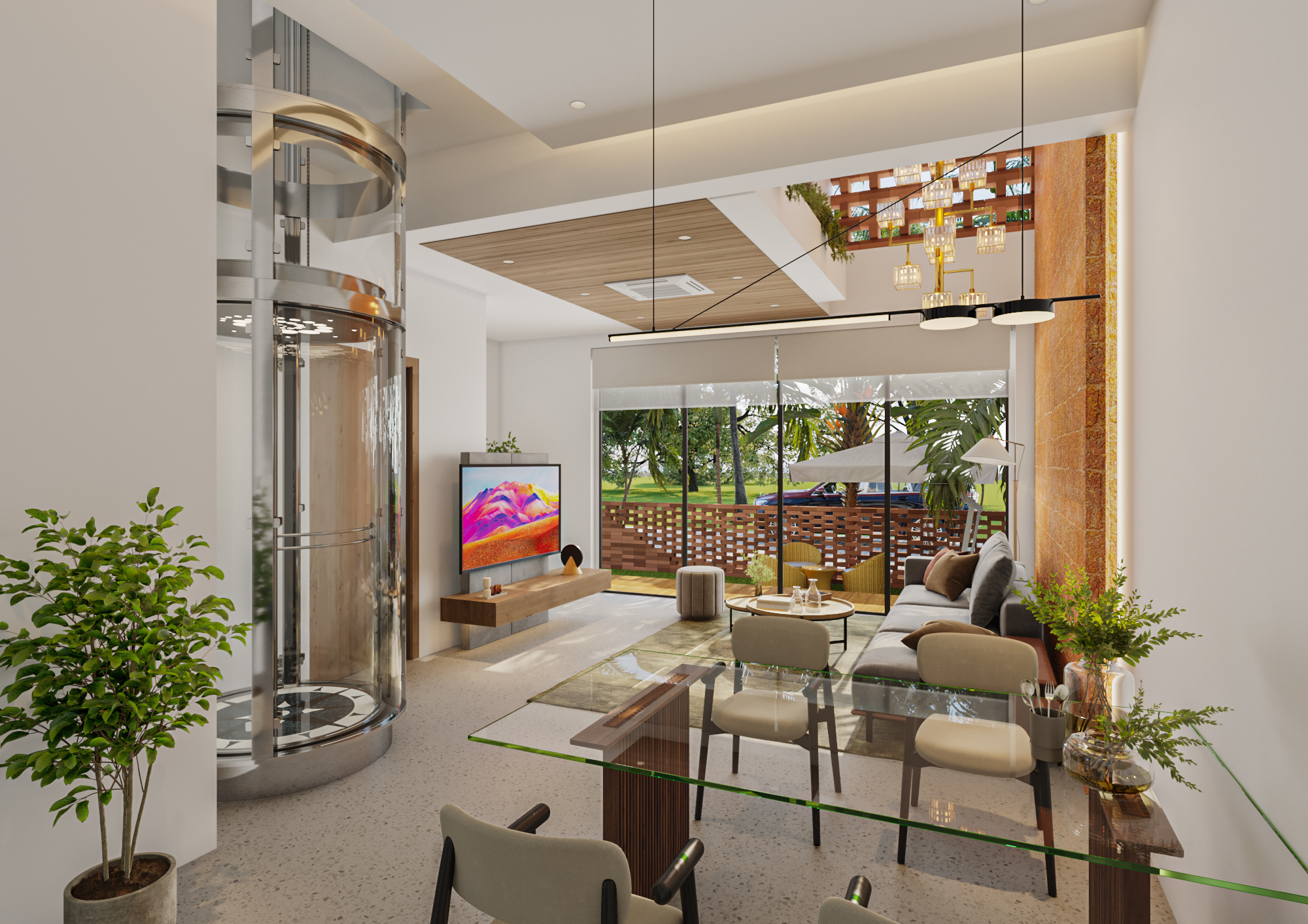
A private residential lift threads all three levels — quietly considered, so arrival feels weightless on every floor of the home.
Manned security, in-residence services on call, and an estate concierge — so the only thing you manage on the weekend is the hammock.
A private speed-boat service at the time of possession, with pick-up and drop from Mandwa Jetty — your sea link to the city.
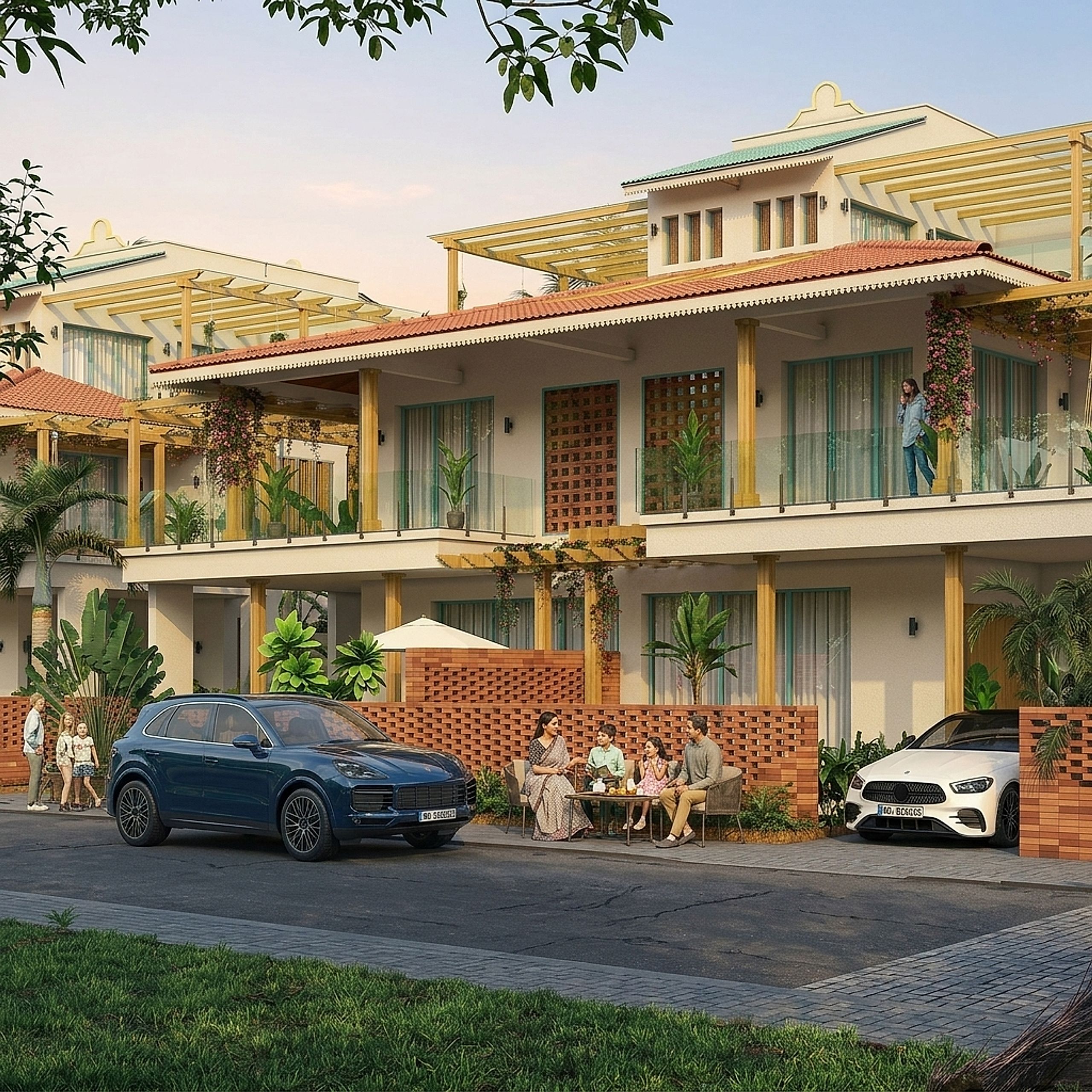
Internal concrete roads lined with mature coastal plantation — connecting every cluster to the clubhouse, the garden, and the sea.
The Residence, In Plan
A G+2 town house — RERA carpet of 1,700 sqft and a useable area of 3,100 sqft. Fully furnished with modern interiors, smart gadgets, a private lift, and a sky pool. Four homes per cluster, each with its own private entry, garden, and ground coverage.
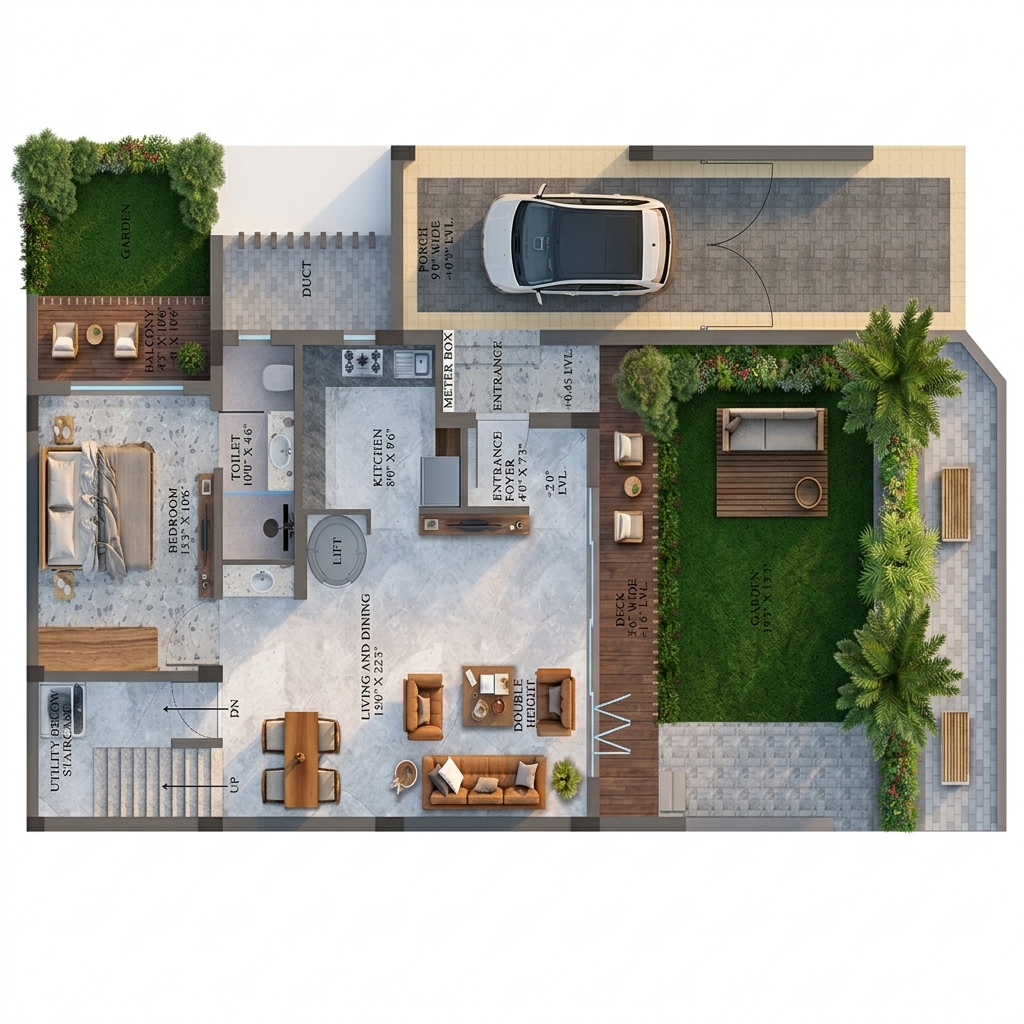
Drive-in parking with porch · Foyer lobby · Lawn & verandah deck · Studio living room with open kitchen · Skylit atrium with vertical connectivity
Pricing on Request
Cerulean is priced from the studio — not from a brochure. Share your email and the current pricing schedule, signed by the founder, will reach you within twenty-four hours.
A Short Film
A cinematic pass through the estate — the cluster, the studio living volume, the private lift, the master suite, and the sky pool at the third level. Best watched with the sound on.
Inside the Residence
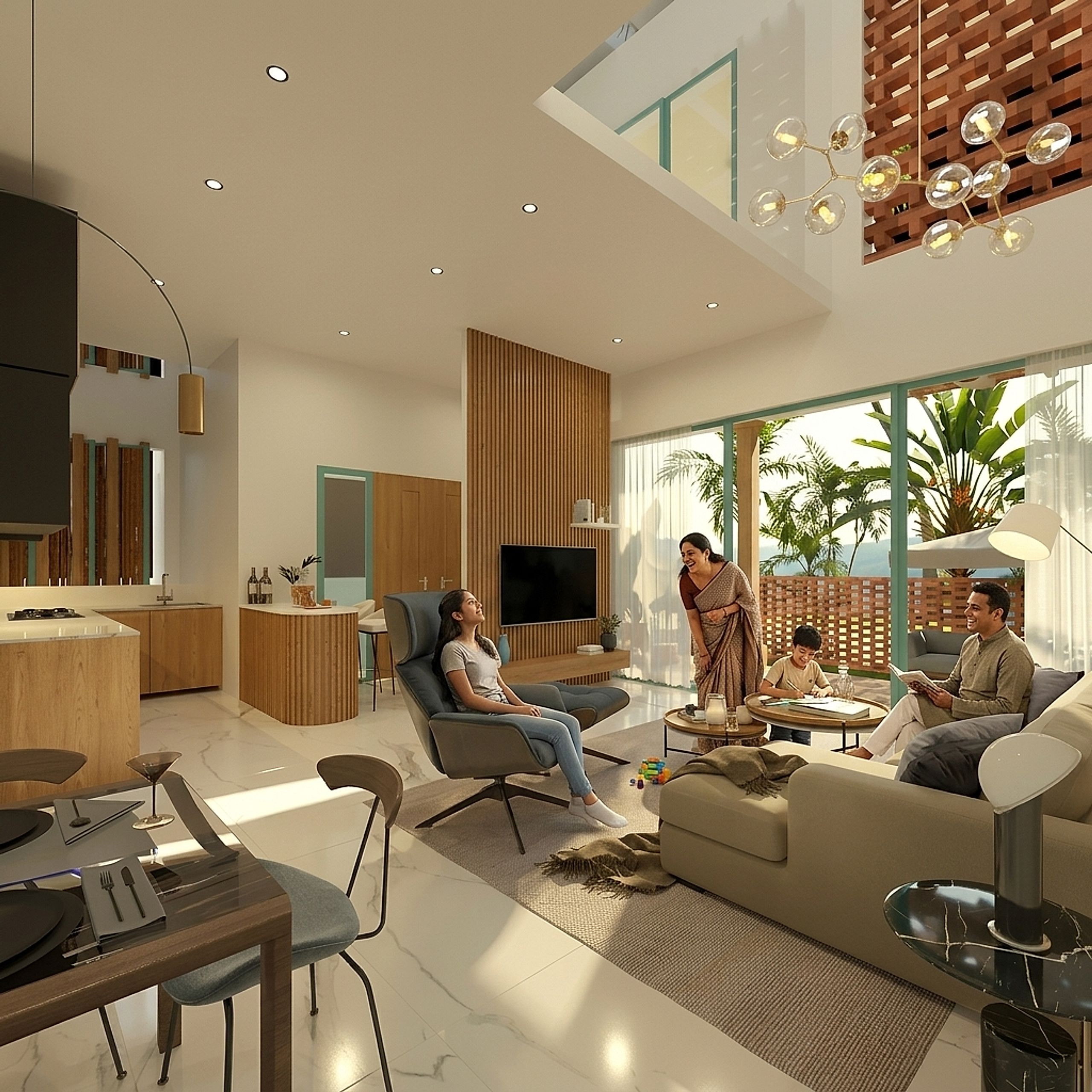
Italian marble. Slatted teak. Brick-screen jaalis. A private lift. Premium Indian sanitary ware and vitrified tiles. Every material chosen for how it will age in the salt air. Every sofa, every wardrobe, every appliance — specified, installed, and tested before you turn the key.
01 / 06
The double-height social heart, fully furnished and switched on.
What Comes With the Keys
Italian marble flooring · double-height atrium · skylit glass roof · slatted teak feature walls
All inclusions delivered fitted, tested, and warranty-registered.
Interior Moments
From the studio at entry, up through the atrium, into the master suite, and out to the verandah — a minute of the home as it actually feels.
The double-height living volume — open kitchen, skylit atrium, the private lift on its quiet ascent.
The staircase climbs through the skylit shaft — linear cove lighting, vertical connectivity, the architecture finding its rhythm.
A slatted teak feature wall, sliding doors to the wrap-around sundeck, the brick-screen perimeter beyond.
The porch swing at the threshold of the home — terracotta tile underfoot, the garden a single step away.
The Material Schedule
Six chapters on the architecture and materials of the residence. The same schedule the architect's office reads from, only at a pace worth reading.
Chapter 01
“Drawn at the scale of an estate, not a township.”
“A weekend should change you, quietly, before you have noticed it has.”
A Weekend, in Frames
01 · Friday
A long drive ends. The car door opens onto your own garden. The week stops here.
02 · Saturday
The sky pool sits above the canopy. No one else is up. The water is still warm from yesterday.
03 · Saturday
A 22-metre lap pool, bougainvillea over the loungers, and the family table for as long as you want it.
04 · Saturday
Friends downstairs in the open kitchen, children running through the atrium. The lift goes up; the night goes long.
05 · Sunday
Seventeenth-century laterite, palms that have seen everything, a tide line you will never forget.
06 · Community
Small enough that you will know your neighbours by name — and far enough apart that you will not have to.
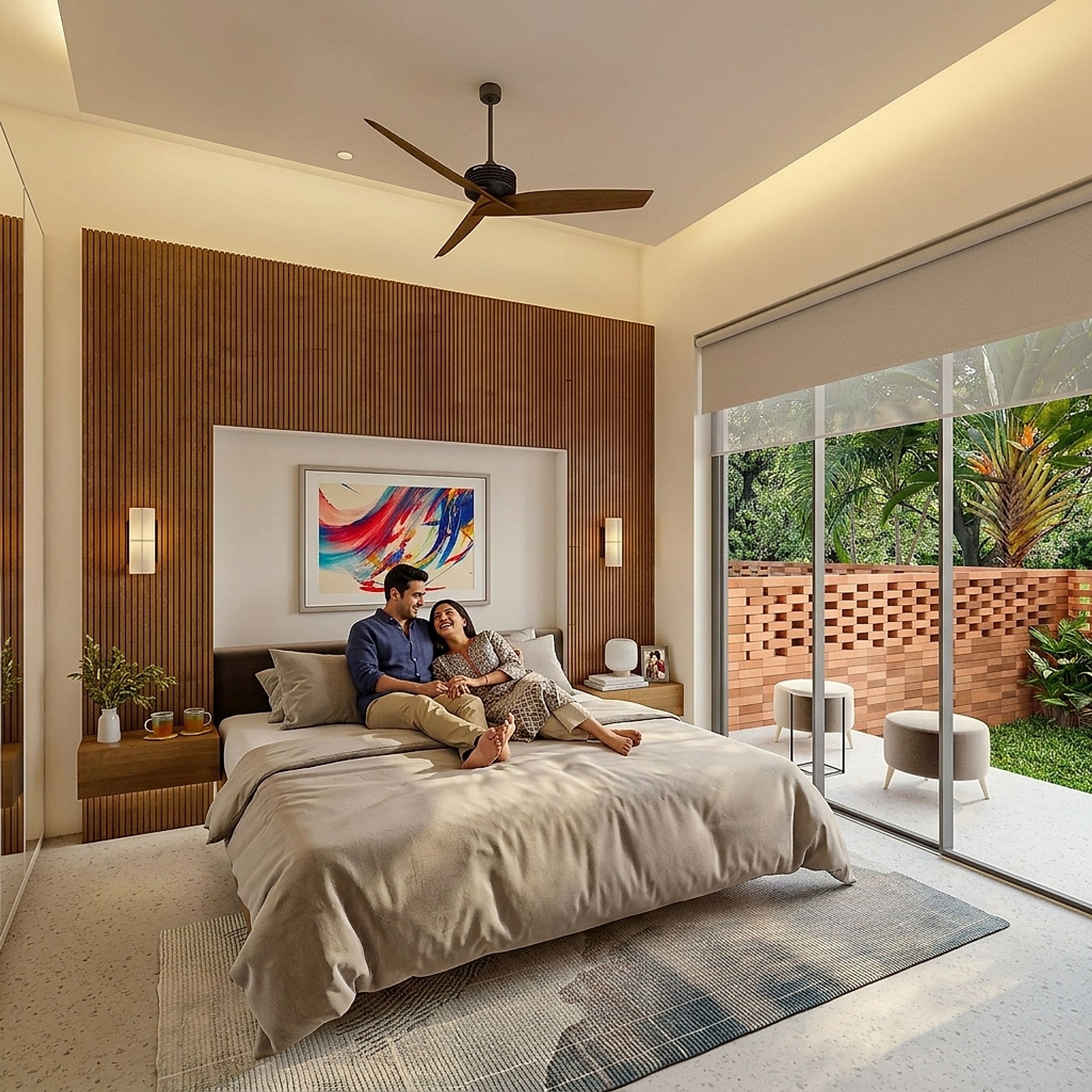
07 · Quiet
Slatted timber, a brick screen, and the wadi just outside the window. Some mornings begin without the alarm.
08 · The Land
Two hundred and fifty acres of protected mangrove on one side, the Arabian Sea on the other.
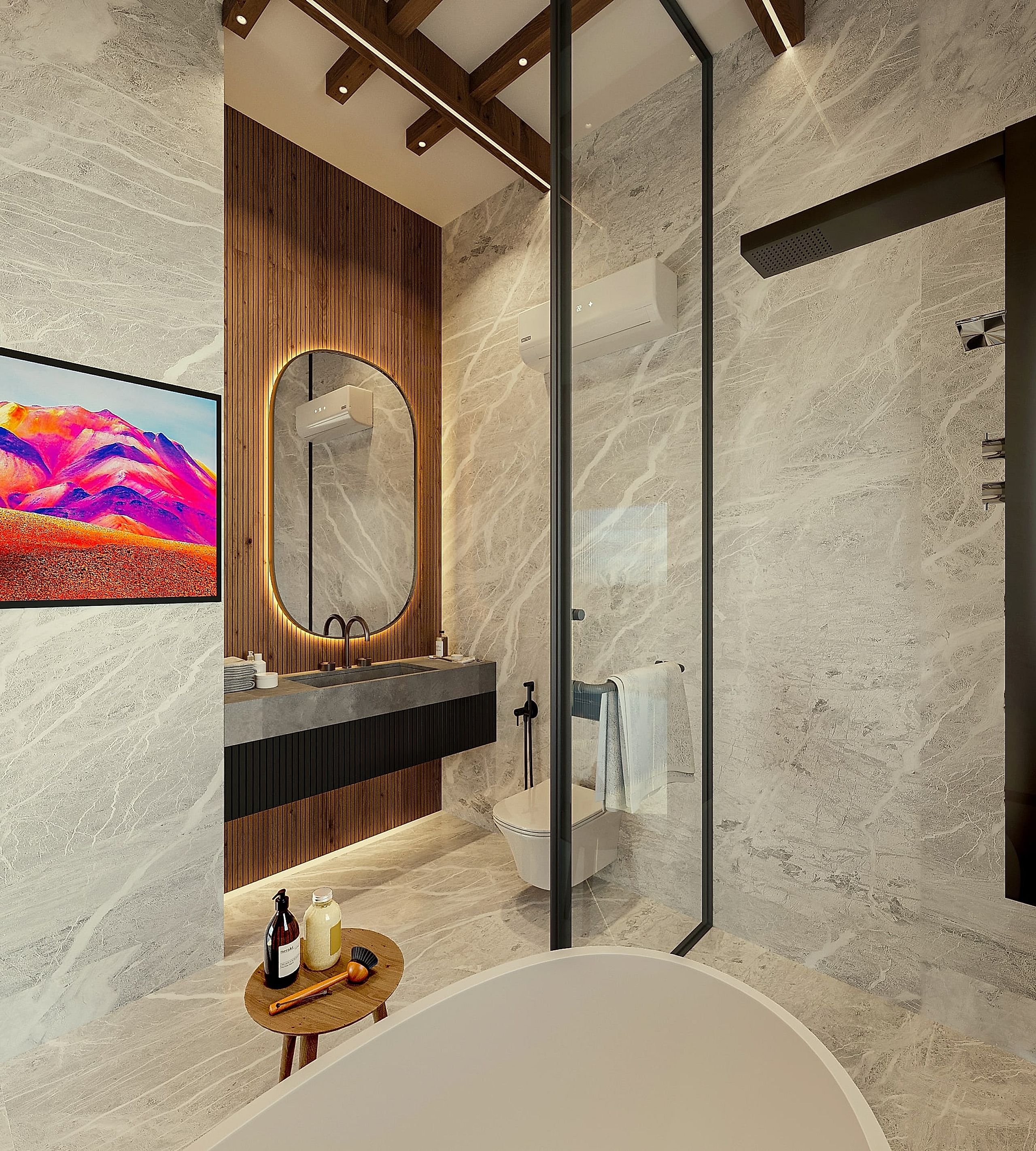
09 · Rituals
Book-matched Italian stone, a freestanding tub, sea-quiet light. The day softens here.
Included With Every Cerulean Home
Every Cerulean residence is delivered with access to HSIOS™ — a digital ownership platform that holds the documents, warranties, asset registers and maintenance history of your home in one organised place. So the work of owning it stays as light as the work of living in it.
I·The Keeping
Held at handover. Available the morning after — and every morning after that.
01
Title papers, plans, possession documents — kept in the single place you will look.
02
Every warranty on the residence, surfaced before the renewal date — never forgotten on the morning of.
03
A structured account of the major systems and assets the home was delivered with.
04
Every service visit, every replacement — kept for the day you will want to look back.
II·The Years That Follow
Captured as ownership unfolds. Held for the long story of the home.
05
The information that matters about the home — quietly held in one secure place.
06
Renovations, refits, and the additions of the years — captured as they happen.
07
So the home’s full story stays available — for the family that follows, and the next custodian.
08
What has been kept well speaks for the home — quietly, on the day it eventually matters.
"The discipline of fine architecture should not stop at handover."
Nishant Mhatre · Creator, HSIOS™
Powered By
HSIOS™
Ownership & Property Intelligence · Hestia Smart Interiors
Built for the long arc of a considered residence — structured documentation, asset management, maintenance intelligence, and the digital groundwork for the years to come. Quietly held, for the family that owns the home today and the one that inherits it tomorrow.
Learn More About HSIOS™The Creator
Nishant Mhatre
Founder & CEO · Hestia Smart Interiors
Drawn from fifteen years across luxury residential development, construction systems, digital twins and property technology — and a single conviction that the work of owning a fine home should feel as quiet as the work of living in one.
About Nishant & HSIOSA home, and the structured digital archive that protects it — the Cerulean advantage, for the decades that follow possession.
Frequently Asked
The ones serious buyers ask before scheduling a visit. The detail you’ll need is below; anything beyond it is for the founder’s office.
A question we didn’t answer? Write to the founder’s office.
Begin the Conversation
Site Address
Survey No. 20/2, Village Revdanda, Palav
Taluka Alibaug · District Raigadh
Founder's Direct Line
+91 98202 36223MahaRERA Registration
P52000081109Verify →
Three Direct Channels
Or reach the office directly.